.webp)
.webp)
.webp)


.webp)
.webp)
.webp)
.webp)
.webp)


Standardize your Infrastructure-as-Code
How Brainboard Helps
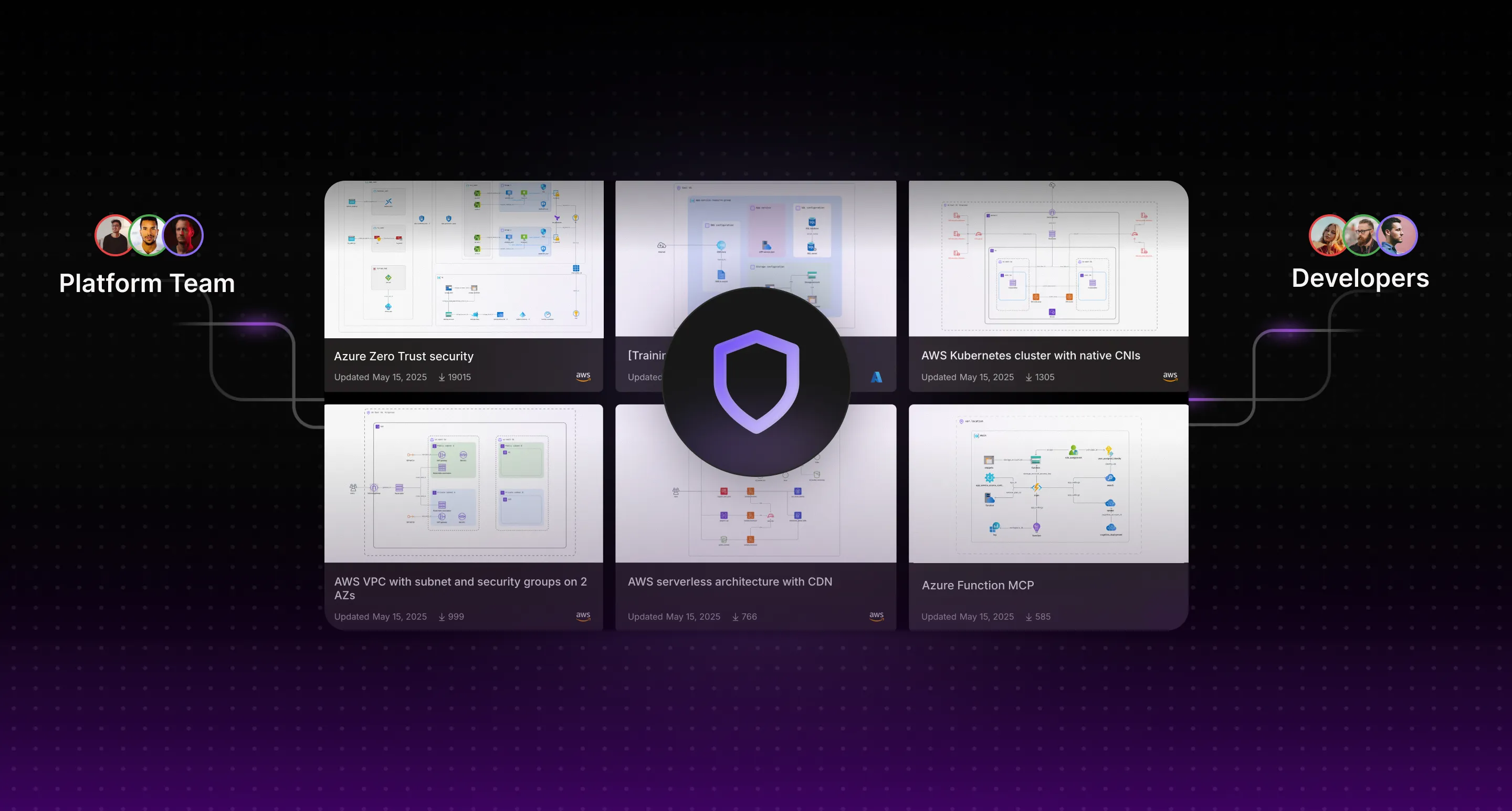
Standardization doesn't start with a document in Confluence, but with a tool that makes the right behavior the most convenient. Brainboard embeds naming strategies directly into the workflow: define them once, and they apply everywhere automatically.Variables are managed centrally - no one accidentally changes sensitive values. Reusable modules and templates turn best practices into building blocks, not recommendations. Pre-commit guardrails catch problems before they reach Git. The result of Infrastructure-as-Code standardization is consistent code, clean change histories, and significantly fewer surprises in review and production.
People
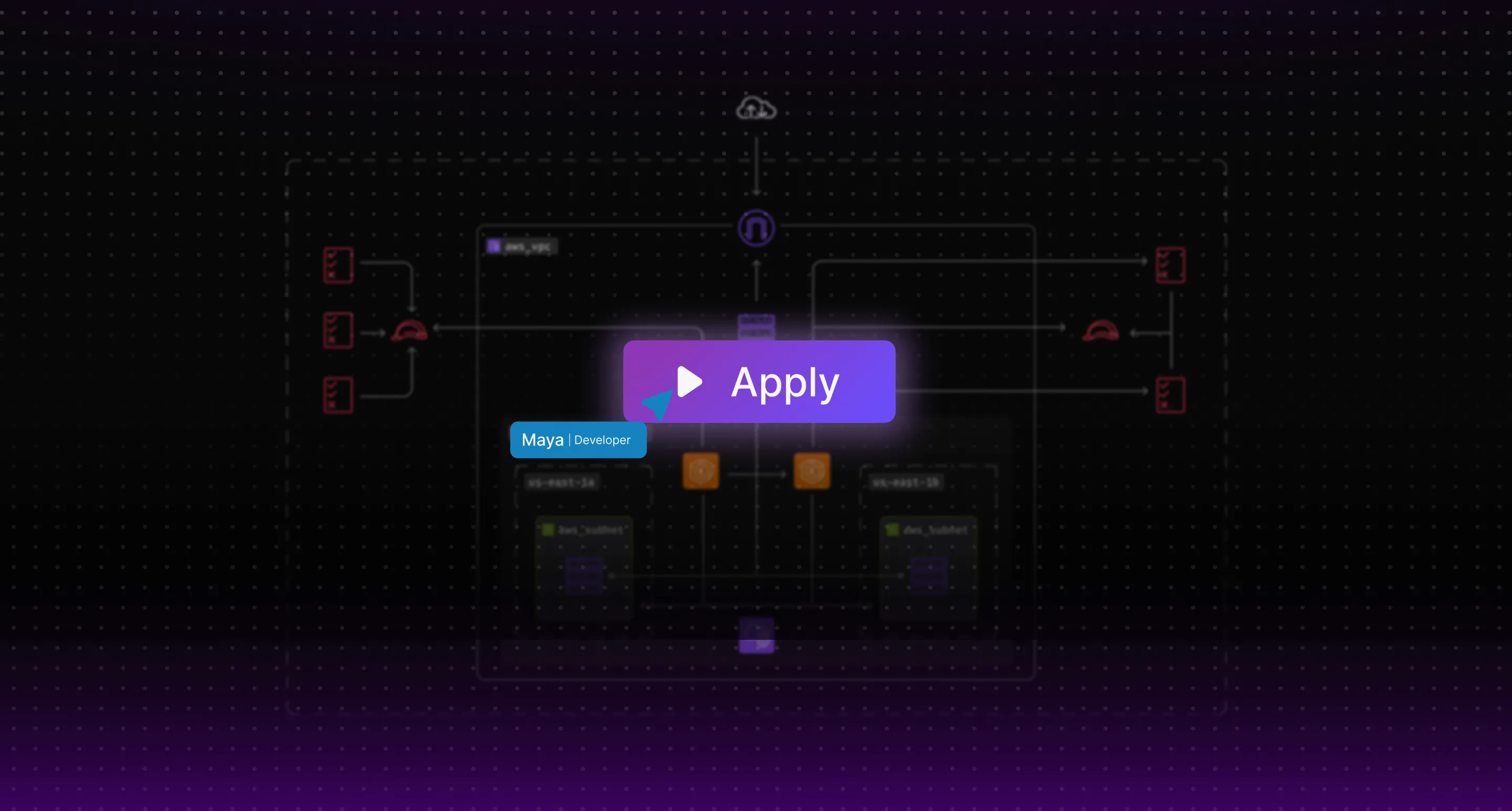
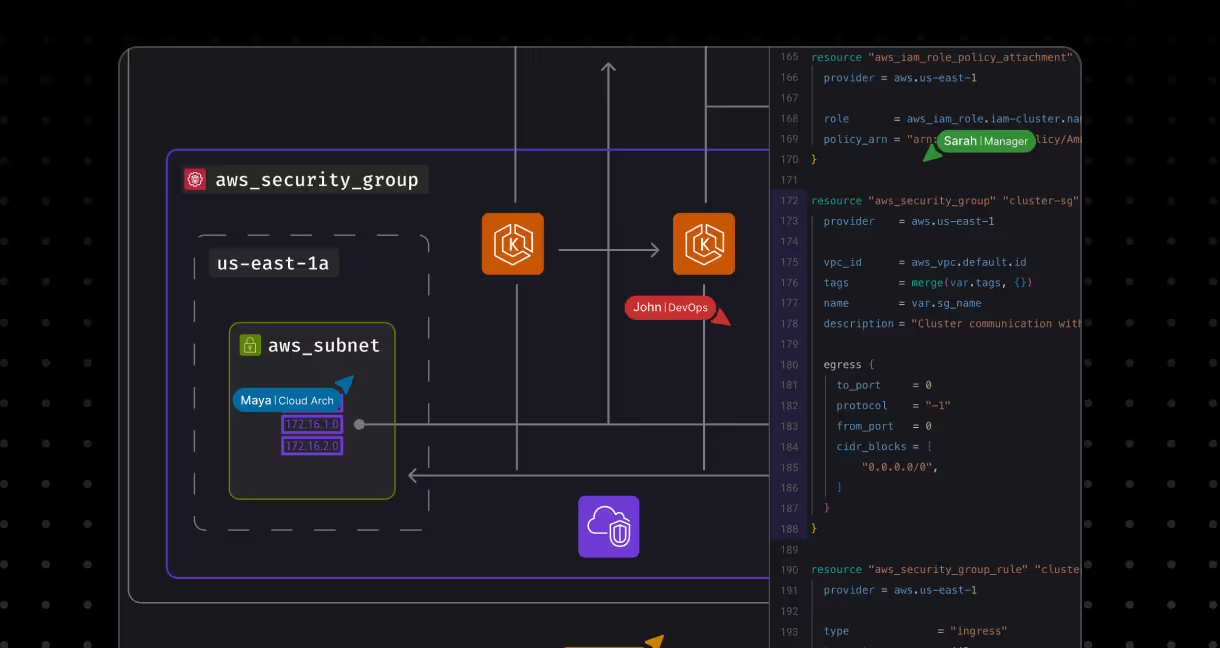
Standards only work when it is clear who is responsible for what and who can change what. DevOps Infrastructure-as-Code without a clear division of roles quickly turns into chaos. Brainboard solves this through RBAC with workspace scoping: granular permissions determine who can view, edit, and approve templates, variables, and modules. New engineers immediately see the standards - no need to extract tribal knowledge from colleagues. The approval process is built into the workflow, and a complete audit trail of every change answers the question "who changed what and when" without investigation.
Tooling
Infrastructure-as-Code benefits are only fully realized when tools support modularity natively, not through workarounds. Brainboard supports Terraform and OpenTofu out of the box: private module catalog, version pinning, golden templates for typical architectures. Cloning a template takes one click in the UI or an API call, including from ServiceNow or other systems. Variables are filled in automatically, dependencies are determined correctly, and code is generated valid the first time. Every stack is repeatable and predictable, regardless of who created it and in what environment.
Process
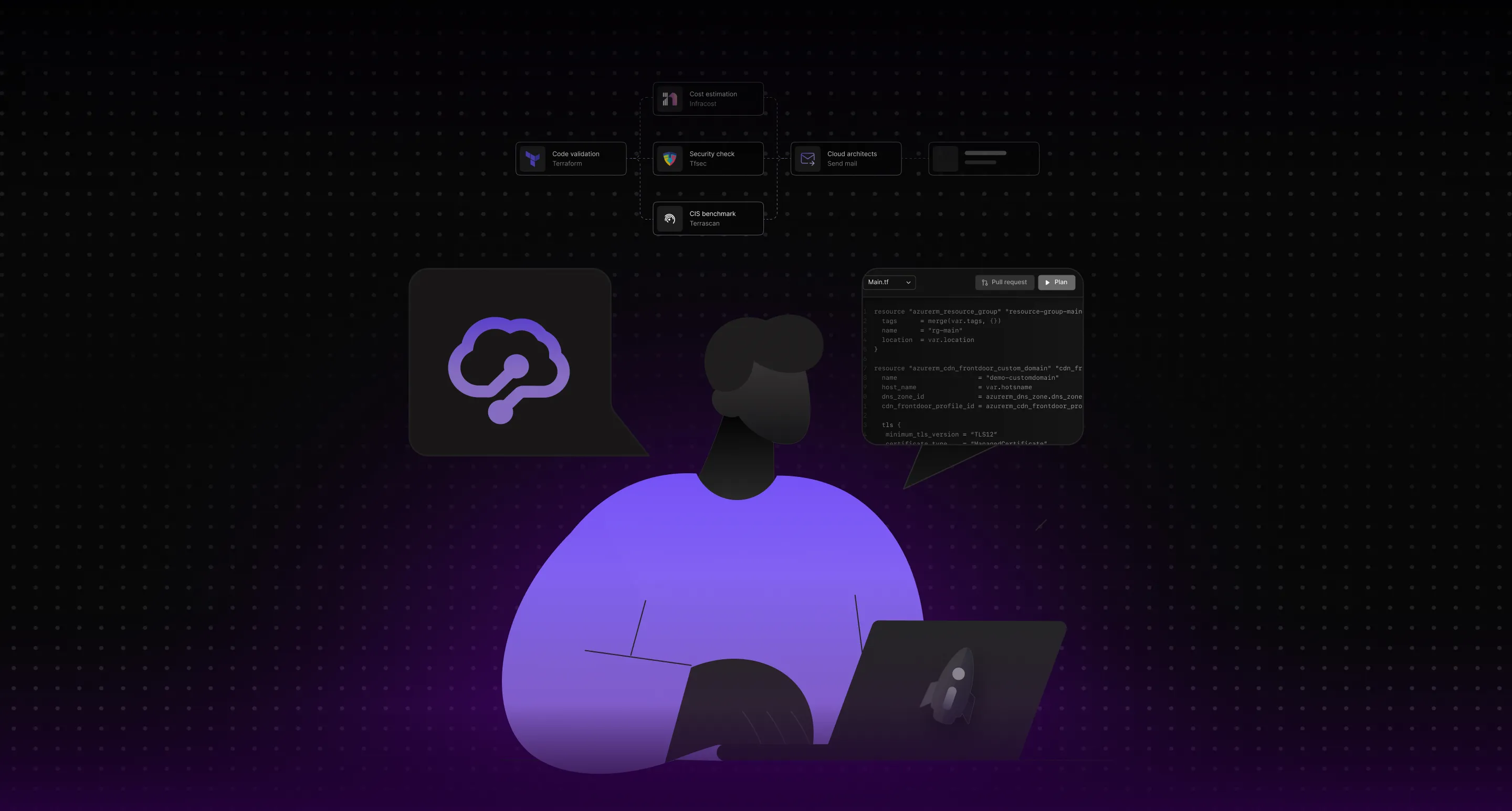
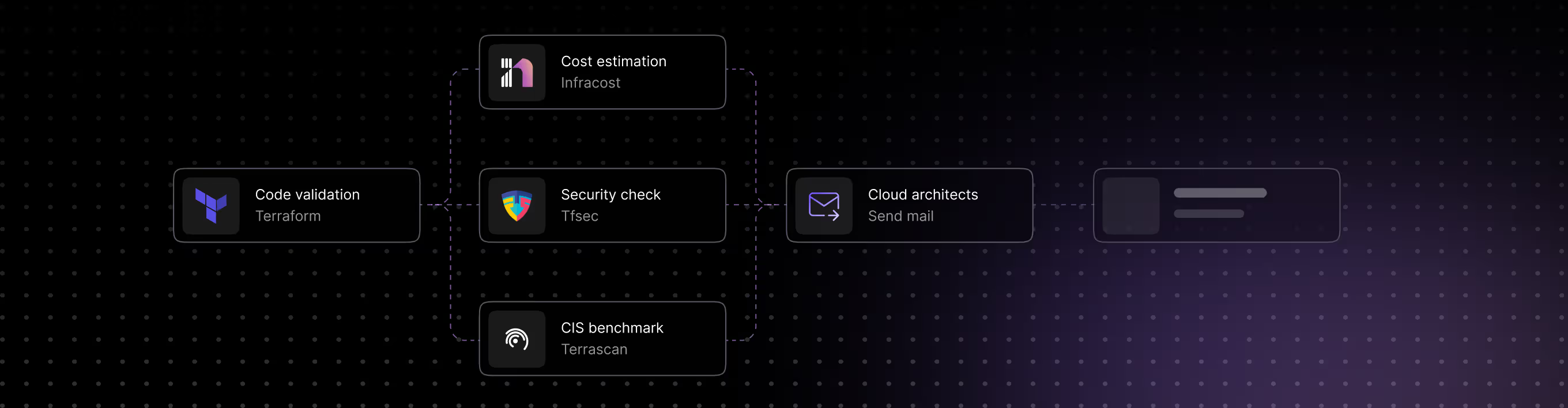
A good process doesn't slow engineers down - it protects them from costly mistakes. Infrastructure-as-Code security in Brainboard works exactly like this: security checks, compliance validation, and cost estimation are run before pushing to Git, not after deployment. A unified workflow plan → review → approve → apply gives you complete control without bureaucracy. Drift detection monitors discrepancies between the source of truth and the actual state of the cloud in real time. Guardrails don't block work - they eliminate classes of errors that would otherwise be discovered at the most inopportune moment.
The Challenge
Disorder in Infrastructure-as-Code best practices is not just technical debt; it is operational risk. When each team uses its own configuration patterns, troubleshooting becomes detective work: it is unclear who owns which resource and why it is configured the way it is. Pipelines are fragile, and security gaps appear where no one has looked. At the business level, this means slower delivery, duplication of work without common standards, and ever-increasing costs for support and audit preparation. Teams spend time parsing other people's code instead of building new code.
Current State
- Hard to maintain compliance and audit readiness
- Multiple configuration patterns
- Difficult troubleshooting and unclear ownership
- Inconsistent and insecure infrastructure setups
Business Impact
- Slower velocity across teams
- High cost of maintenance and audit readiness
- Teams duplicate effort without shared standards
- Increased security risks and no feedback loop

Technical Deep Dive Behind IaC Migration
The Infrastructure-as-Code market is moving towards standardization - and Brainboard provides the technical foundation for this transition.
Core Concepts


Implementation Process
Core Concepts
.webp)
Architecture Overview
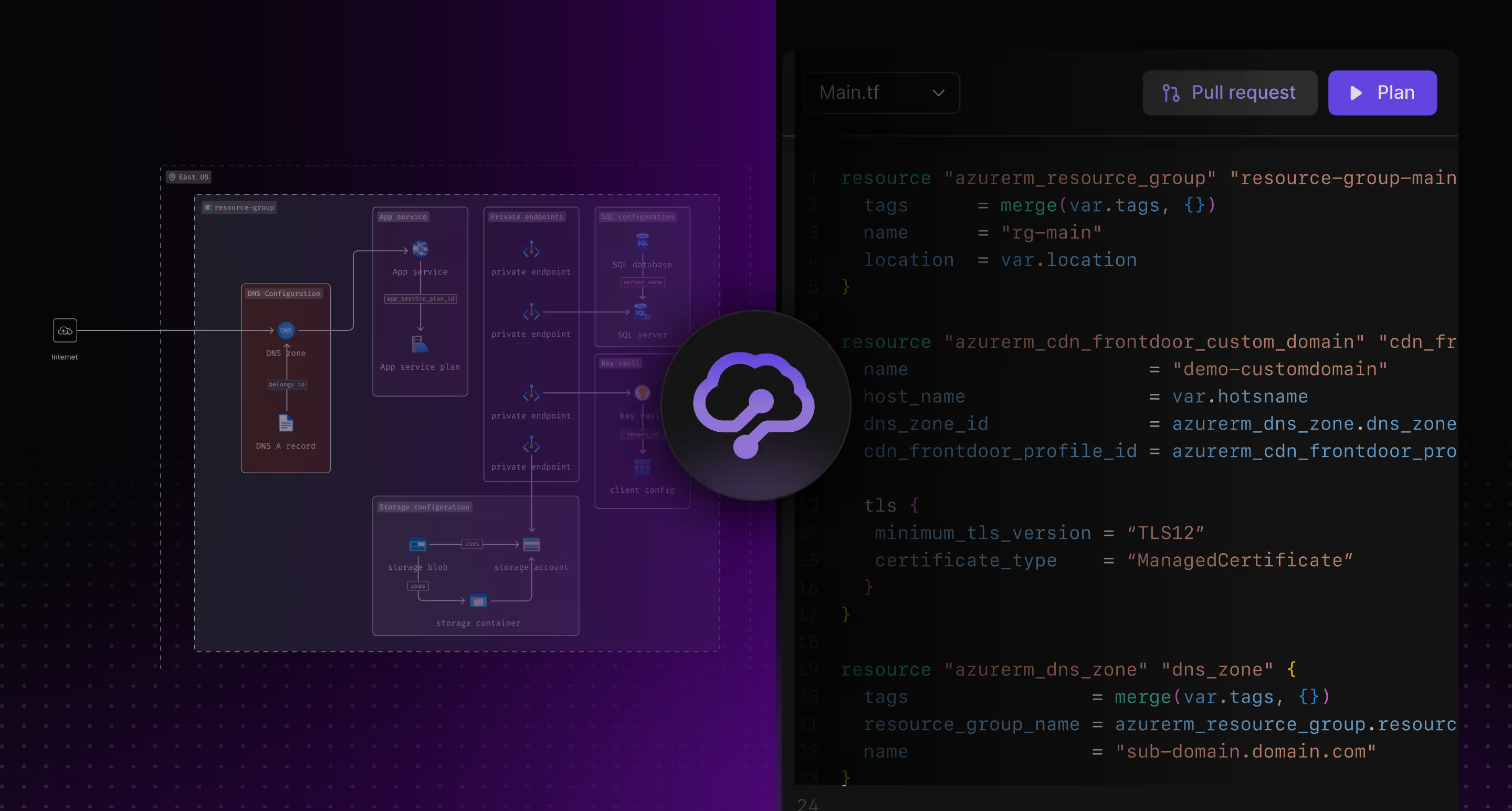
Before Brainboard, engineers faced overwhelming complexity: they had to understand Terraform, cloud services, networking, and security simultaneously - without breaking production.Cloud infrastructure solutions Brainboard changes this picture: engineers start with what they already know, and the platform guides them through each step. The visual interface translates complex concepts into understandable blocks. Best practices are built into templates. The entire lifecycle - build, update, and manage - is managed in a single, user-friendly platform, without the need to switch between tools and documentation.

Current Infrastructure
Each team uses different naming, modules, and practices — causing drift and confusion.

Brainboard Platform
Visual workflows, role-based access, and reusable templates enforce consistency by design.
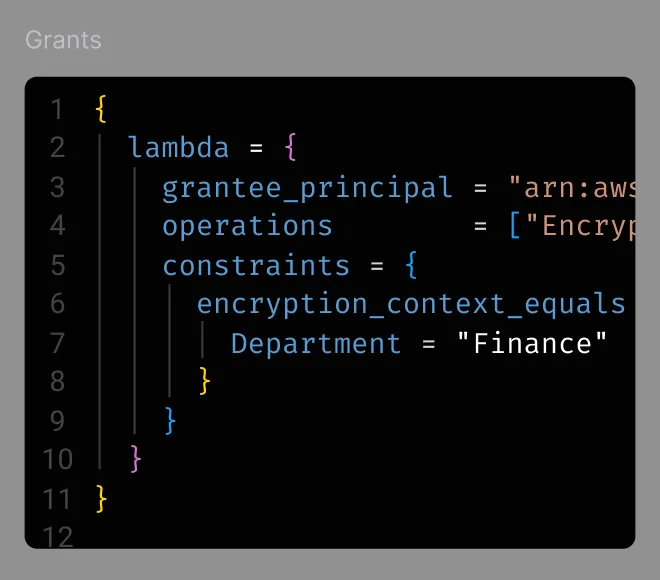
Terraform Code
Standardized, production-ready code that’s version-controlled, documented, and secure.
Benefits & Outcomes
The results of Infrastructure-as-Code standardization with Brainboard are measurable: 99% policy adoption rate - because standards are built into the tool, not separate. 95% fewer configuration errors - thanks to automatic validation and pre-approved templates. 80% faster onboarding of new teams - visible standards and inline documentation eliminate the need to figure out "how things are done here." In practical terms, this means higher uptime, stable audit readiness at any time, and significantly lower infrastructure support costs.
Policy adoption rate
Fewer config errors
Faster onboarding of new teams

Consistent Configurations
Shared variables, modules, and naming conventions eliminate snowflakes - unique configurations that only the author understands. Debugging is faster because all environments look the same. Parity between dev, staging, and prod becomes the norm, not a holiday. IaC standardization means that the next engineer who opens your code will say "I get it" - not "what's going on here?"

Faster Onboarding
New engineers start with pre-approved templates with built-in documentation and examples right in the interface. No need to reverse-engineer someone else's logic, no need to spend hours figuring out "why it's done this way." On day one, it's already clear how the infrastructure works and what can be touched.

Improved Collaboration
Common patterns align platform, security, and app teams on the same wavelength. Code review focuses on reducing risks rather than discussing style. Handoffs are predictable - the receiving party understands the context without lengthy briefings and verbal explanations.

Reduced Maintenance Cost
Update the standard once - the change propagates everywhere. Fewer manual edits, more predictable pipelines, and clear forecasting of support efforts. Standardizing Infrastructure-as-Code means you pay for the change once, rather than rework it in each environment.
Real-World Success
“Using Brainboard, our team standardized infrastructure patterns across clouds and teams in 2 weeks. Manual configurations were replaced with repeatable, version-controlled modules — saving 30+ hours per engineer.”



Enterprise SaaS Customer
50+ Engineers, Multi-cloud Infrastructure
Your questions, answered.
Didn’t find the answer to your question?
How does Brainboard help standardize IaC across teams?
Can I reuse standardized templates in new projects?
Does Brainboard support naming conventions and tagging policies?
What if different teams currently use different IaC approaches?
Can I control who edits templates or deployments?
Didn’t find the answer to your question?