How to Detect & Remediate Cloud Infrastructure Drift
Stephane Boghossian
Introduction
In the dynamic realm of cloud computing, enterprise-level organizations necessitate a robust strategy to monitor how their infrastructure is being modified. A pivotal component of this strategy is terraform drift detection, which is essential in pinpointing and amending any disparities between the infrastructure’s desired and actual state. A renowned tool for this purpose is Brainboard.
In this discourse, we will unveil the prime practices for employing Terraform/OpenTofu to execute drift detection, thereby enhancing security in your enterprise cloud realm. We will also emphasize the significance of vigilant infrastructure monitoring for drift and the potential security hazards stemming from neglecting this practice.
This exposition aims to furnish invaluable insights and guidelines for enterprises aspiring to proficiently manage and secure their cloud infrastructure utilizing Terraform/OpenTofu and drift detection terraform.
- Understanding Cloud Infrastructure Drift
- The Imperativeness of Drift Detection
- The Mechanism of Drift Detection
- The Perils of Overlooking Drift
- Illustrative Use Cases
- Best Practices
- Top-notch Tools
Understanding Cloud Infrastructure Drift
Initiating a drift detection terraform workflow in Brainboard can be a significant step. Infrastructure drift is the scenario where the existing infrastructure state diverges from the one delineated in the IaC (Infrastructure as Code) configuration. This variation can manifest due to myriad reasons.
Augmenting the adoption of IaC or amplifying the coverage of cloud resources via IaC can mitigate the occurrences of drift. Pre-defining the intended configurations and security protocols before deployment minimizes the propensity for later modifications via the cloud console. Nonetheless, unforeseen events or errors can still trigger changes.
Drift could emanate from human intervention, erroneous configuration, applications inducing unwanted alterations, among others. Two prevalent drift instigators are associated with procedural or workflow glitches, like manual adjustments in a cloud console not being transcribed as code or alterations applied to certain environments but not disseminated to others.
Common Drift Causes
- Manual Adjustments: Manual interventions outside of Terraform/OpenTofu, CloudFormation, or other IaC.
- Authenticated Applications: Microservices behaving aberrantly.
- Out-of-sync IaC Environments: Concealed or unnoticed changes across different environments.
Drift detection terraform is akin to possessing a crystal ball for your cloud infrastructure. It empowers you with foresight, enabling the capture of issues before escalation, ensuring your infrastructure remains on the trajectory of success.
Why Drift Detection for Cloud Infrastructures
Terraform/OpenTofu drift detection on cloud infrastructures encompasses the identification and reporting of discrepancies between anticipated and actual states of a cloud infrastructure, vital for assuring correct functionality and compliance with organizational and industry standards.
Drift manifests when unauthorized or undocumented alterations are made to the cloud infrastructure, for instance, a developer altering a cloud-based application sans informing the IT department, culminating in inconsistencies.
Drift detection apparatuses can discern these inconsistencies, alerting IT squads to scrutinize and rectify them. Early terraform drift detection can avert security vulnerabilities and compliance infringements.
Monitor and Remediate Performance
Terraform/OpenTofu drift detection in cloud infrastructure can unveil alterations in the configuration of resources, such as virtual machines or databases, which might lead to security vulnerabilities or compliance challenges. It can also highlight changes in resource utilization that could induce performance hitches or escalate costs. This data can be harnessed to enact corrective measures, like remedying security vulnerabilities or optimizing resource usage.
In essence, drift detection terraform can bolster the performance and security of machine learning models and the cloud infrastructure by spotting and addressing issues prior to reaching a critical juncture.
How does Drift Detection Work?
Drift detection output in Brainboard
The mechanism of Terraform/OpenTofu drift detection revolves around contrasting the present state of the infrastructure with the condition delineated in the Terraform/OpenTofu configuration files.
- Executing the terraform plan command will prompt Terraform/OpenTofu to compare the current infrastructure state with the stipulated state in the Terraform/OpenTofu configuration files, generating a plan showcasing the necessary amendments to align the infrastructure with the desired state.
- Upon running the terraform apply command, Terraform/OpenTofu will effectuate those infrastructure alterations.
- The terraform state list command enables viewing all the resources that Terraform/OpenTofu is managing in your infrastructure.
- The terraform state show command unveils the details of a specific resource, encompassing its current state and desired state, as outlined in the Terraform/OpenTofu configuration files.
Whenever the terraform plan command is executed, Terraform/OpenTofu compares the state of all resources with the conditions defined in the configuration file. Any discrepancy is categorized as drift. The drift will be displayed in the planned output and can be rectified using the terraform apply command.
Summarily, Terraform/OpenTofu drift detection operates by comparing the current infrastructure state with the state prescribed in the Terraform/OpenTofu configuration files and reporting any variances as drift. This facilitates the identification of any alterations made to the infrastructure outside of Terraform/OpenTofu and enables the enactment of suitable measures to realign the infrastructure with the desired state.
Drift Detection vs. Drift Management
Drift management encapsulates a holistic approach towards ensuring security and swiftly addressing drift by identifying and rectifying any drift in managed resources and any unmanaged resources in cloud environments. The ideal scenario would entail security and development teams utilizing IaC to comprehensively manage their cloud resources. This includes detecting unmanaged resources, transcribing them to code, testing, and implementing the organization’s security and compliance policies to transition them to a secure state.
Risk of Being A-Drift
Unmanaged drift in cloud infrastructures can precipitate several risks:
- Security vulnerabilities: Drift can lead to vulnerabilities like misconfigured firewalls or open ports, potentially enabling unauthorized access to sensitive data or systems, culminating in data breaches or other security incidents.
- Compliance issues: Drift can also result in compliance challenges, such as failing to meet regulatory requisites or industry standards, which might lead to fines, penalties, or reputational damage.
- Performance issues: Drift in cloud infrastructure can trigger performance issues, such as increased latency or decreased throughput, adversely affecting user experience, inflating costs, or even leading to service outages.
- Increased costs: Drift can also lead to unnecessary expenses, such as wasted or over-allocated resources, which in turn can result in higher-than-anticipated bills or inefficiencies.
- Operational complexity: Drift in cloud infrastructure can escalate the complexity of managing, troubleshooting, and maintaining the infrastructure, leading to heightened operational complexity and costs.
- Misaligned resources: Drift can cause resources to deviate from the actual application requirements, leading to wasted resources or under-allocated resources.
By detecting and addressing drift in cloud infrastructure through terraform drift detection, organizations can mitigate these risks, ensuring the infrastructure remains secure, compliant, and performs optimally.
Utilizing Infrastructure as Code (IaC) can aid in preventing drift and swiftly rectifying issues by automating a larger portion of infrastructure management. Unlike manual configurations, IaC minimizes the likelihood of errors and missing dependencies. It also facilitates standardization of infrastructure setup, enabling better security control and restoring a healthy version of infrastructure in case of downtime.
Drift Detection Use Cases
Here are five compelling use cases for terraform drift detection in cloud infrastructures:
- Compliance: Ensuring compliance with regulations such as HIPAA, PCI DSS, and GDPR is imperative. Drift detection helps maintain a secure and compliant infrastructure.
- Security: Detecting unauthorized changes which could signify a security breach is crucial. Early drift detection allows IT teams to investigate and remediate security incidents promptly.
- Change Management: Validating changes made to the cloud infrastructure ensures they are authorized and align with organizational policies and procedures.
- Disaster Recovery: Identifying inconsistencies that could hinder disaster recovery efforts is crucial. Drift detection aids in identifying and rectifying these inconsistencies.
- Cost Management: Identifying inefficiencies that lead to unnecessary costs is vital. Drift detection helps in detecting and correcting these inefficiencies, optimizing performance, and reducing costs.
Best Practices: Secure Your Infrastructure
Create multiple CI/CD workflow in Brainboard. Creating multiple CI/CD workflows in Brainboard is a notable practice. A holistic approach to IaC security encompasses the following steps:
- Amplify the use of IaC to manage a larger percentage of cloud resources across all environments.
- Employ an IaC security tool to scan configurations during development and build pipelines, catching early misconfigurations and passing security reviews.
- Utilize IaC tools like Terraform/OpenTofu or AWS CloudFormation for synchronized infrastructure detection.
- Implement an open-source drift detection terraform tool like driftctl to identify drift issues in production and report them to developers promptly.
- Take action on findings by having developers add more code and import it into IaC tools such as Terraform/OpenTofu.
- Ensure the newly created Terraform/OpenTofu configurations are secure using an IaC security tool.
- Repeat the process until satisfactory coverage of resources is achieved, potentially repeating for each region.
- Create recurring jobs for alerting on changes to critical resources such as IAM and less critical cloud services.
Top Ten Tools for Drift Detection
Terraform/OpenTofu stands as a pivotal tool that empowers you to delineate and manage infrastructure as code. There are several tools that can be harnessed for drift detection terraform when working with Terraform/OpenTofu:
- Terraform/OpenTofu Drift Detection Documentation: Terraform/OpenTofu comes with built-in drift detection capabilities to identify changes in the infrastructure made outside of Terraform/OpenTofu by comparing the current state with the defined state in Terraform/OpenTofu configuration files.
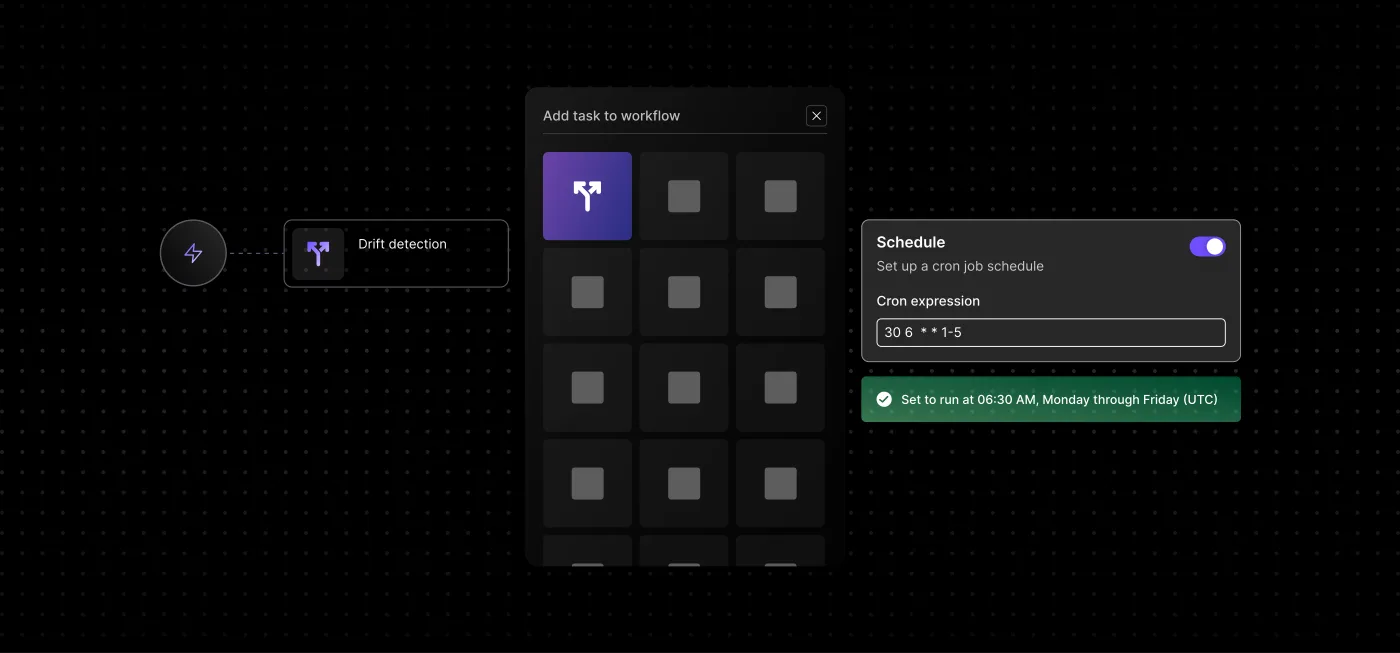
- Brainboard: Brainboard is a cloud management platform that facilitates engineers in designing, deploying, and managing cloud infrastructures. It offers a drift detection feature in its CI/CD Engine, notifying responsible parties in the event of drift, scheduling workflows for optimized timing, and maintaining order during active workflows. Learn more about terraform drift detection for Brainboard by visiting Discover Drift Detection for Brainboard.
- Terratest vs Driftctl: Terratest is a Go library simplifying the process of writing automated tests for your infrastructure. It can be employed to test for drift by contrasting the current state of the infrastructure with the expected state defined in the tests. Driftctl is an open-source tool designed to identify drift issues in production and report them to developers clearly and promptly.
- TestInfra: TestInfra, a Python library for testing infrastructure, can be utilized for drift detection by comparing the current and expected states of the infrastructure. Here is the link of the GitHub.
- Kitchen-Terraform/OpenTofu: Kitchen-Terraform/OpenTofu is a plugin for the Test Kitchen framework that permits testing of Terraform/OpenTofu modules. It can be used to test for drift by contrasting the current infrastructure state with the expected state defined in the tests.
- AWS Config Rules: This service allows the creation of custom rules to evaluate AWS resources’ configurations. It can detect drift in your AWS infrastructure by triggering actions upon drift detection.
- Azure Policy: A service by Microsoft Azure that allows the creation, assignment, and management of policies enforcing rules and effects for your resources. It can detect drift and enforce compliance rules in Azure infrastructure.
- Google Cloud Asset Inventory: Providing a detailed view of all assets in your Google Cloud organization, it can detect drift in your Google Cloud infrastructure and trigger actions upon drift detection.
- Datadog Algorithmia: Datadog is a cloud-based monitoring and analytics platform enabling monitoring of your infrastructure, applications, and log data. It can detect drift in your infrastructure and trigger actions upon drift detection.
Conclusion
In conclusion, terraform drift detection is a critical facet of efficiently managing and securing cloud infrastructure for enterprise organizations. Whether utilizing Brainboard or another tool, regular monitoring of your infrastructure for drift and addressing any disparities between the desired and actual state is crucial.
By embracing terraform drift detection best practices, you can proactively identify and resolve issues before they escalate into major problems, significantly enhancing the overall security of your cloud environment.
As the cloud computing domain continues to evolve, drift detection terraform will become increasingly vital for ensuring the reliability, performance, and security of your cloud projects, regardless of the cloud provider employed.
In totality, proactive drift detection and management stand as indispensable practices for any enterprise-level cloud project, guaranteeing the alignment of your cloud infrastructure with organizational objectives and industry standards.

.webp)
.webp)
.webp)


.webp)
.webp)
.webp)
.webp)
.webp)