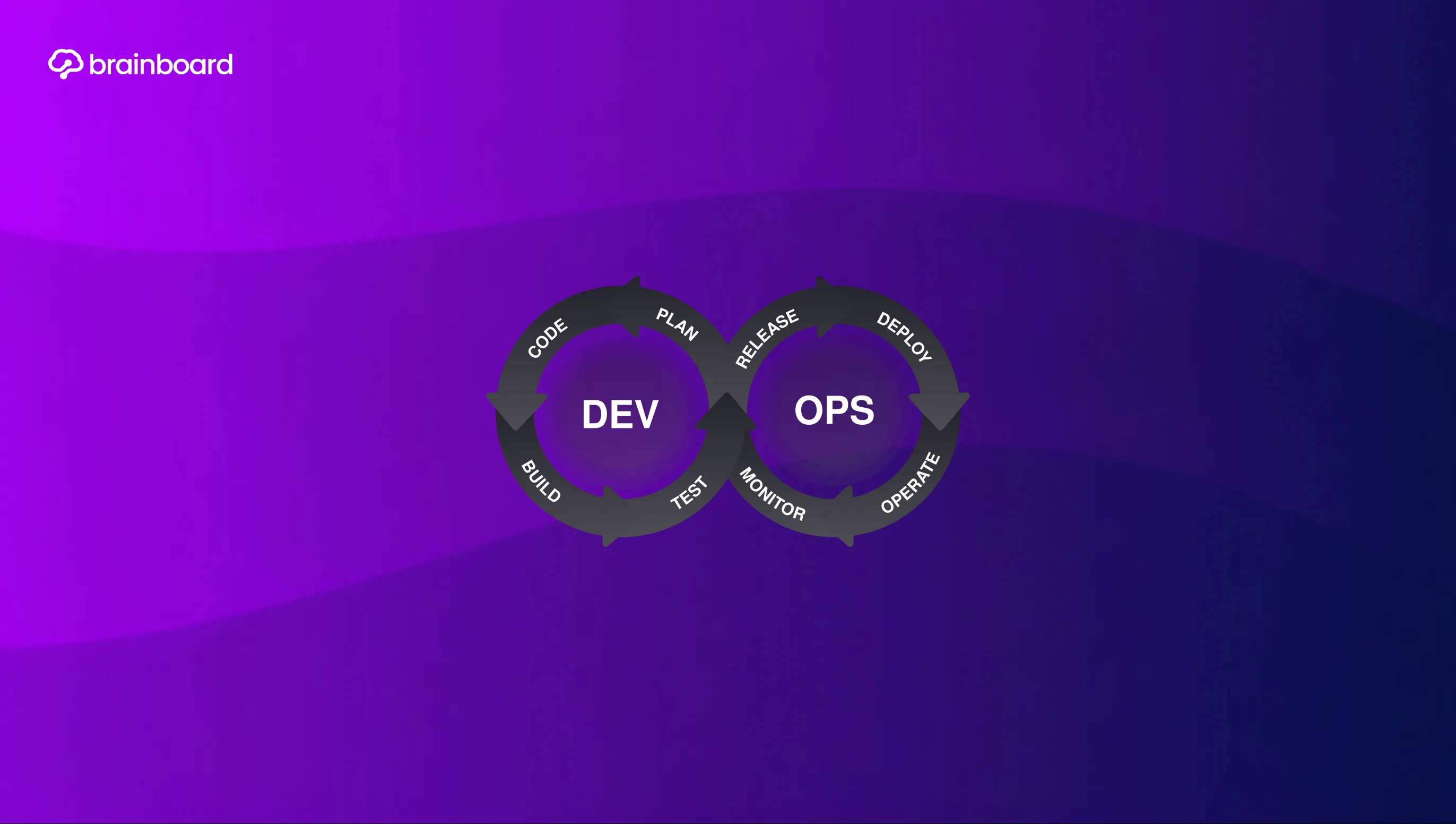
DevOps Infrastructure Automation for Faster, Safer Releases
Chafik Belhaoues
A Thursday deploy takes down staging. Forty minutes into the retro, someone figures out a security group got tweaked by hand three weeks earlier. But nobody documented it! This story plays out everywhere, every week.
DevOps infrastructure automation exists to make that scenario impossible. Everything - provisioning, configuration, testing, deployment - runs through code and pipelines instead of manual steps. This article covers what that looks like when it works, which tools matter, and where to start if half of this is still done by hand.
What Is DevOps Infrastructure Automation?
The core idea: instead of logging into a console and clicking through screens to set up a server, you write a file that describes what you want. A machine reads it and builds it. Same result every time.
What changed recently is that the tooling caught up. Automating a multi-cloud setup used to mean custom scripts held together with hope. Now there are mature DevOps infrastructure automation services that handle the heavy lifting: describe the desired state, and the system builds, tests, scans, and deploys it. The gap between "need a new environment" and "it's running" shrank from weeks to minutes.
Why Automation Is Critical for Faster and Safer Releases
Speed gets all the attention, but safety matters more. Without automation: dev works, staging works, production breaks. Because somebody set up production months ago and configuration drifted - a package updated here, a firewall rule tweaked there. Nothing dramatic on its own, just enough small differences piling up until something snaps on a Friday evening.
Automated infrastructure kills that category of failure. Every environment gets built from the same code - same packages, same configs, same behavior. When something does go wrong, rollback is a Git revert and a pipeline run, not a midnight scramble through changelogs.
Core Components of DevOps Infrastructure Automation
No single tool covers all of this. It's a stack where each layer solves a different problem, and the pieces need to communicate cleanly with each other.
Infrastructure as Code (IaC)
The foundation. Files - usually Terraform, sometimes Pulumi or CloudFormation - describe every piece of infrastructure: servers, networks, databases, load balancers. The code lives in Git, goes through review, and gets applied through Terraform plan and Terraform apply. Predictable, auditable, and repeatable.
Where this gets interesting is platforms that let teams design architecture visually and auto-generate the Terraform underneath. The code stays in sync with the diagram - useful when communicating architecture to stakeholders who don't read HCL.
Configuration Management
What happens after the server exists? Ansible runs over SSH, installs packages, drops config files, and ensures services are running. Chef and Puppet do similar work, but need agents on every machine. The principle: every box in the fleet looks identical. Manual changes get corrected on the next run - configuration management kills drift at the server level.
CI/CD Pipeline Automation
The assembly line. Code gets pushed, tests run, security tools scan for issues, and if everything passes, deployment happens. For infrastructure specifically, this means the Terraform plan runs on every pull request, someone reviews the diff, approves it, and the changes are applied automatically.
A well-built automation platform wires together security scanning (Checkov, TFC, OPA), cost estimation (Infracost), and deployment into a single pipeline - rather than stitching together five separate CI tools with YAML.
Monitoring and Auto-Remediation
Deployment isn't the finish line. Monitoring catches service failures, full disks, and traffic spikes. Auto-remediation goes further: the system scales, restarts crashed processes, or rolls back a bad release without human intervention.
DevOps infrastructure automation isn't complete until this loop closes - build, deploy, watch, fix, all automated.
Top DevOps Automation Tools and Platforms
The landscape is big, but what teams actually rely on in 2026 is a shorter list. Terraform (or OpenTofu) dominates IaC - multi-cloud, declarative, massive ecosystem. Ansible handles config: agentless, SSH-based. Chef and Puppet persist in organizations that adopted them years ago. For CI/CD, GitHub Actions and GitLab CI dominate the market; Jenkins is everywhere, but nobody starts new projects on it by choice. Kubernetes handles container orchestration.
Then there's the platform category. Brainboard sits here - a visual DevOps automation tools platform combining IaC design, Terraform generation, CI/CD pipelines, security scanning, and multi-cloud management under one roof. CloudFormation and Pulumi round out the IaC alternatives.
Benefits of DevOps Infrastructure Automation Services
For engineers: fewer pages at 3 AM, fewer Fridays debugging environment mismatches, more time writing code that ships features.
For the business: faster launches, with provisioning taking minutes instead of weeks. Better uptime because drift detection and automated rollbacks catch problems before customers notice. Lower cloud bills because idle "just in case" resources stop lingering.
The compliance angle matters too. NIS2, EU AI Act, SOC 2 - regulators want proof that changes go through code review, scanning, and approval workflows. DevOps technology that enforces these checks automatically is what auditors expect to see.
DevOps infrastructure automation services that combine provisioning, scanning, and governance in a unified workflow make compliance provable by default - not something teams scramble to demonstrate before an audit.
How to Get Started with DevOps Automation
The fastest way to stall is to try to automate everything at once. Pick the single thing that hurts most and start there.
Maybe it's provisioning - every new environment requires a ticket, two approvals, and a week. Automate that with Terraform. Maybe it's deploy - set up a pipeline for one service. Or maybe it's a drift: production doesn't match the Git repo. Get drift detection running on the critical stack first.
Once that first win lands, expand. Add scanning. Bring in config management. Automate the next environment. Layer by layer, not big-bang.
A few things matter early: pick tools the team can learn (don't force Kubernetes on three engineers with five VMs), write docs as you go, and treat infrastructure code like application code. Visual design tools that generate Terraform automatically lower the barrier for team members who aren't IaC experts yet.
FAQ
What is the difference between DevOps automation and traditional IT automation?
Traditional IT automation handles individual tasks - a backup script, a scheduled restart. DevOps automation connects tasks end-to-end: commit triggers tests, which triggers a scan, which triggers a deploy, which triggers monitoring. It's the chain, not a single step.
Which DevOps automation tools are best for small teams?
Terraform, GitHub Actions, and Ansible cover IaC, CI/CD, and server config without a dedicated platform team. Brainboard bundles IaC design, pipelines, and scanning in one place for teams without a dedicated DevOps person.
How long does it take to implement infrastructure automation?
A basic pipeline for one project: days. Full setup with scanning, drift detection, and self-service provisioning: months. Start with one painful workflow and expand from there.
Is DevOps infrastructure automation only for cloud environments?
No. Terraform manages VMware and bare-metal; Ansible works with anything that supports SSH. The biggest wins come in cloud environments where everything is API-driven, but the tooling isn't locked there.
Do I need a dedicated DevOps team to use automation?
Not necessarily. Someone needs to own the initial setup and first docs. After that, if the tools are well chosen and the code is clean, any developer can contribute.

.webp)
.webp)
.webp)


.webp)
.webp)
.webp)
.webp)
.webp)